

Bilbao is the Spanish city that has best implemented an urban transformation throughout the country's recent history. Before 1997, Bilbao was an industrial city in decline: the closed ponies, the contaminated ría, the stop by the clouds and a historic center that survived between the decline and the Basque pride that this city has always had. That year it opened the Guggenheim Bilbao Museum, designed by Frank Gehry, and everything changed. Not overnight, but in a systematic and well-planned way: the river was cleaned, the industrial springs became walks, the metro was designed by Norman Foster, the Santiago Calatrava airport, the Euskalduna Soriano- Palacios Palace. Bilbao bet on architecture and culture as a regeneration engine, and the bet worked.

Today Bilbao is one of the most interesting cities in Spain to visit: it has the best contemporary art museum on the Peninsula, the best gastronomy in the north (and probably throughout the country), a medieval historical town with a genuine neighborhood life and a perfect geographical position to explore the Costa Vasca, San Sebastian and the French Basque Country on one-day excursions. This guide gives you everything you need to make the most of it.
Why Bilbao surprises almost everyone
Most travelers who arrive in Bilbao for the first time come with low expectations, attracted mainly by the Guggenheim. And they are completely conquered by something they did not expect: the quality of life of the city, the kindness and pride of its inhabitants, the concentration of pintxos bars in the Old Town, the cleaning of the river that in the 1980s was a landfill and today perfectly reflects the buildings of the banks, and a gastronomic scene that has more Michelin stars per inhabitant than any other region of Spain.
Bilbao is not a city to see in a hurry. It is a city to stay, walk without concrete destination, enter any bar of the Old Town at 12: 30 and get carried away by the ritual of the pinx and the white wine of the north.
The Guggenheim Bilbao Museum: much more than the building

The Guggenheim Bilbao Museum is the most photographed building in Spain after the Sagrada Família in Barcelona. And there are reasons for this: Frank Gehry's structure, with its curved titanium-coated surfaces that change color according to daylight, is one of the most influential architectural works of the 20th century. The building itself is the most important visit in Bilbao, regardless of what is inside.
But there's a lot inside. The permanent collection of the Guggenheim Bilbao includes contemporary and modern works of art of first level: Puppy by Jeff Koons (the giant dog of flowers at the entrance that has become the symbol of Bilbao), the light installation of Dan Flavin, the sculptures of Richard Serra in the Serpent Room (one of the most physically shocking contemporary art experiences that exist: steel columns of 14 meters that form a maze by which you walk), the paintings of Basquiat, Rothko, Chillida and Oteiza.
The temporary exhibitions rotate several times a year and are usually of the first international level: the Guggenheim of Bilbao has budget and contacts to bring the best exhibitions of the world circuit.
Practical Council: the Guggenheim has free entry on Wednesday from 17h for residents of the Basque Autonomous Community. For the rest, the general entrance costs about €16-18. Online booking to avoid queues, especially in high season. The best light to photograph the building from outside is first hour in the morning (with gold titanium) or last hour in the afternoon (with the sunset light on the row).
El Casco Viejo: the medieval soul of Bilbao
15 minutes walk from the Guggenheim, across the river, the Casco Viejo de Bilbao (Alde Zaharra in Basque) is the historic district of the city, founded in the 14th century by the lord of Bizkaia Diego López de Haro. The old town has a medieval structure of seven parallel streets (the original Seven Streets) that are still the commercial and social heart of the neighborhood.
What makes the Old Town of Bilbao special is not that it is especially monumental (although it has the Cathedral of Santiago of the 15th century and the Arriaga Theatre of the 19th century), but the life of the authentic neighborhood it has: the bilbaínos of all life continue to buy in the usual shops, taking the painting of noon in the same bars of the same usual and walking through the same streets of the same usual. Tourism has arrived but has not displaced that life.
The most important points of the Old Town:
Bank market: the largest covered market in Spain in length (with the facade directly on the ria), reconverted into a reference gastronomic space with local product posts and tasting area. The art déco architecture of the building is 1929.
Plaza Nueva: the Neoclassical porticade square of the Old Town, built in 1821, with supports throughout its perimeter and pintxos bars on the ground floor of all buildings. On Sundays there is a market for books and antiques.
Cathedral of Santiago: the Gothic church of the 15th century that was compulsory stop on the Camino de Santiago of the coast. The tower, the cloister and the main porch are the most outstanding.
Arriaga Theatre: The Hungarian opera theatre, built in 1890 in a Neobaroque style, with the facade directly on the ria. One of the most recognizable images of Bilbao.
The Pintxos: Basque gastronomy in pure state
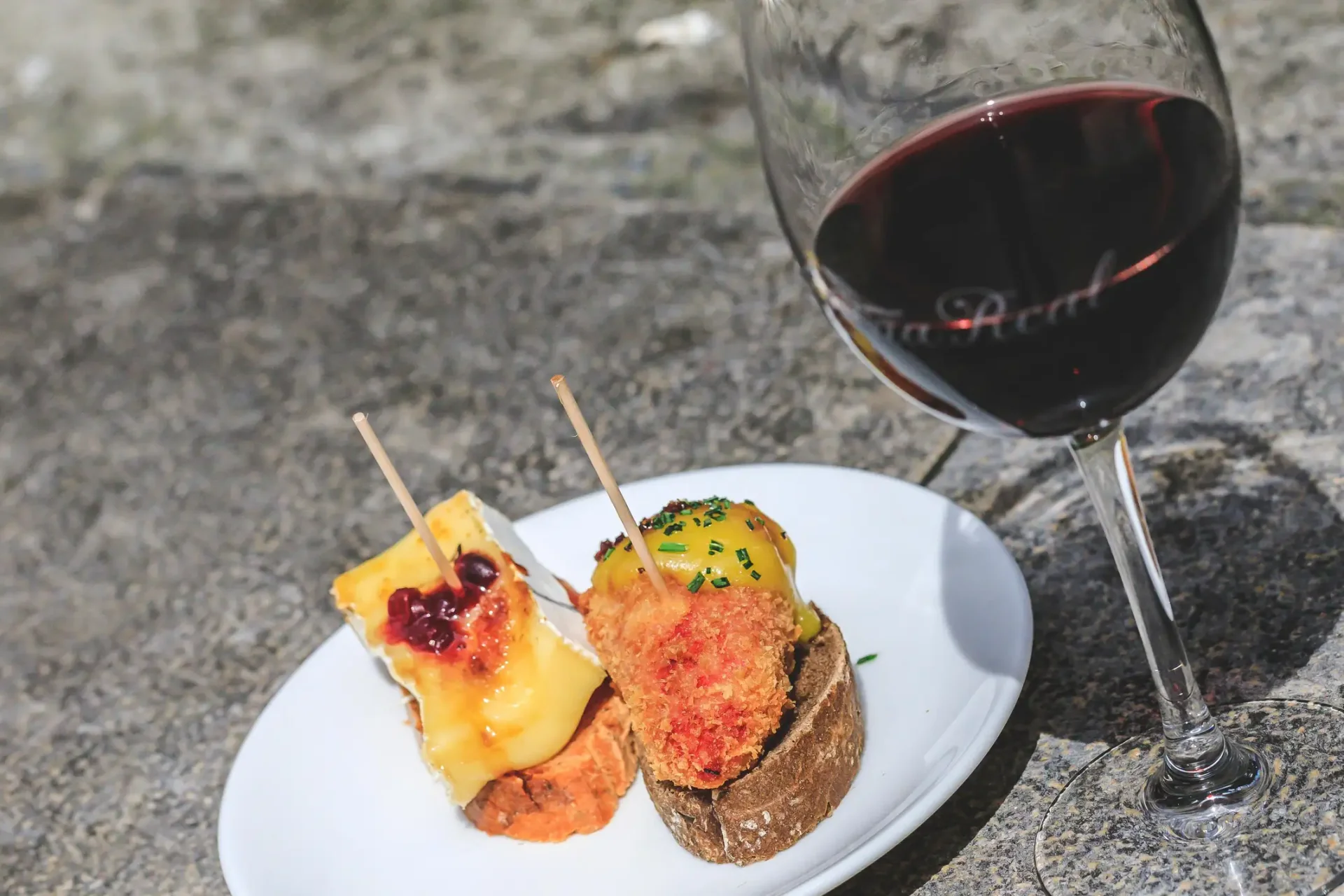
Bilbao has the most interesting cuisine in northern Spain and one of the best in the country. The culture of the pintxo - the Basque version of the cover, but much more elaborate - is here a social and artistic institution: the bars compete with each other to have the most creative, most beautiful and most tasty pintxos, and the bilbaínos go through them in groups, stopping in each bar to take one or two pintxos and a txakoli (the slightly sparkling white wine of the Basque Country) before following the next.
The fundamental difference between the Basque pintxo and the Andalusian cap: the pintxo is generally not free (it is paid per unit, between 2 and 4 €), but the quality and the production are usually much higher. The best paintings in Bilbao are small works of gastronomy: foie gras with reduction of Txakoli, kokotxa of cod to pil pil, crispy txistorra with codorniz egg, gamba to the ajillo on glass bread.
The most concentrated areas of pintxos bars are the Old Town (especially Ledesma Street and the surroundings of Plaza Nueva) and the Indautxu district. For those not initiated in the ritual, a guided gastronomic tour is the most efficient way to see the best bars and try the best painters without getting lost among the offer:
The award-winning Bilbao Food Tour & Wine Pairing by Basque Local - Top rated. The best-valued gastronomic tour of the whole city: 3 hours with local guide experienced by the best bars of the Old Town, with paintings and portraits of Basque wines. Perfect rating for 5.0 with more than 967 reviews. It's constantly running out. From €105.
Bilbao: Basque gastronomic tour and wine tasting with guide - Top rated. 3 hours of route for Pintxos and Basque wines with local guide. 4.9 valuation with more than 768 opinions. It's running out quickly. From €95.
Bilbao: exclusive wine tasting and food tour with local guide - Top rated. The most exclusive version with smaller groups and more elaborate wine selection. 4.9 valuation with more than 346 opinions. From €96.
Bilbao by electric bike: the most efficient way to see the city
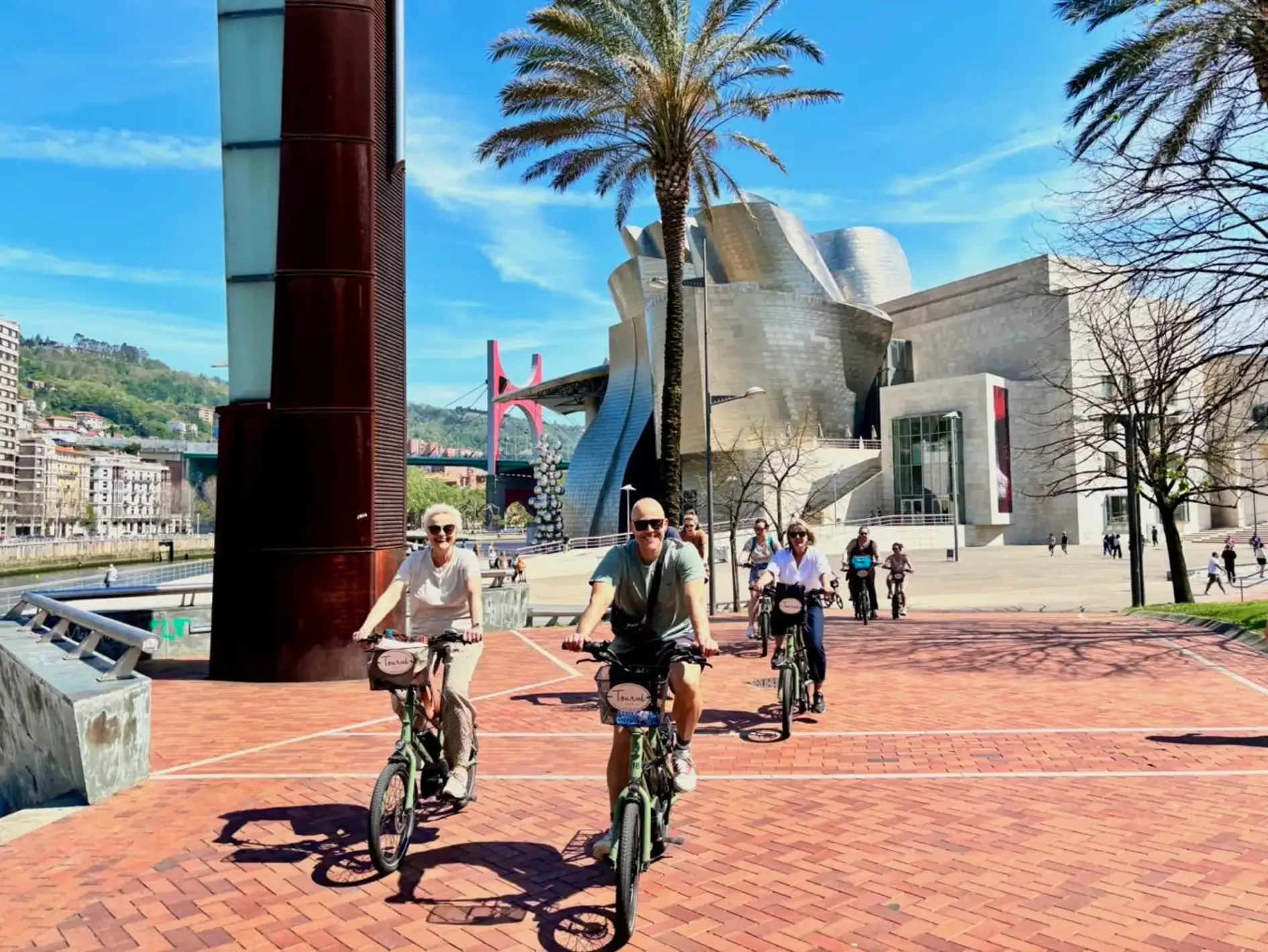
Bilbao has a unique topography: the Old Town is at the bottom of the valley, the Guggenheim is on the banks of the river, and the residential neighborhoods go up the slopes of the mountains surrounding the city. The electric bike is the perfect way to move between all these points without the exhaustion that would involve doing it on foot or the complications of car traffic.
Bilbao: guided tour in electric bike in small group or private - Top rated. 3 hours tour of the Guggenheim, the ria, the Old Town and the historical neighborhoods with guide and electric bike included. 4.8 with more than 605 opinions. From €49. The best value ratio - price to see Bilbao complete.
Excursions from Bilbao: the Basque coast and beyond
Bilbao is a perfect basis for exploring the Basque Country on one-day excursions. The natural and historical environment of the province of Bizkaia is of extraordinary quality, with some of the most dramatic coastal landscapes in Spain.
Gaztelugatxe, Mundaka and Gernika: the necessary tour
Gaztelugatxe is one of the most impressive landscapes in northern Spain: a small volcanic rock island attached to the coast by a stone bridge with 241 steps that spiral up to the San Juan hermitage at the top. The landscape of the Cantabric from above, with the waves breaking against the rock below, is of those that remain forever recorded in memory. It is also internationally famous for having served as a stage in the series Game of Thrones (like Rocadragon).
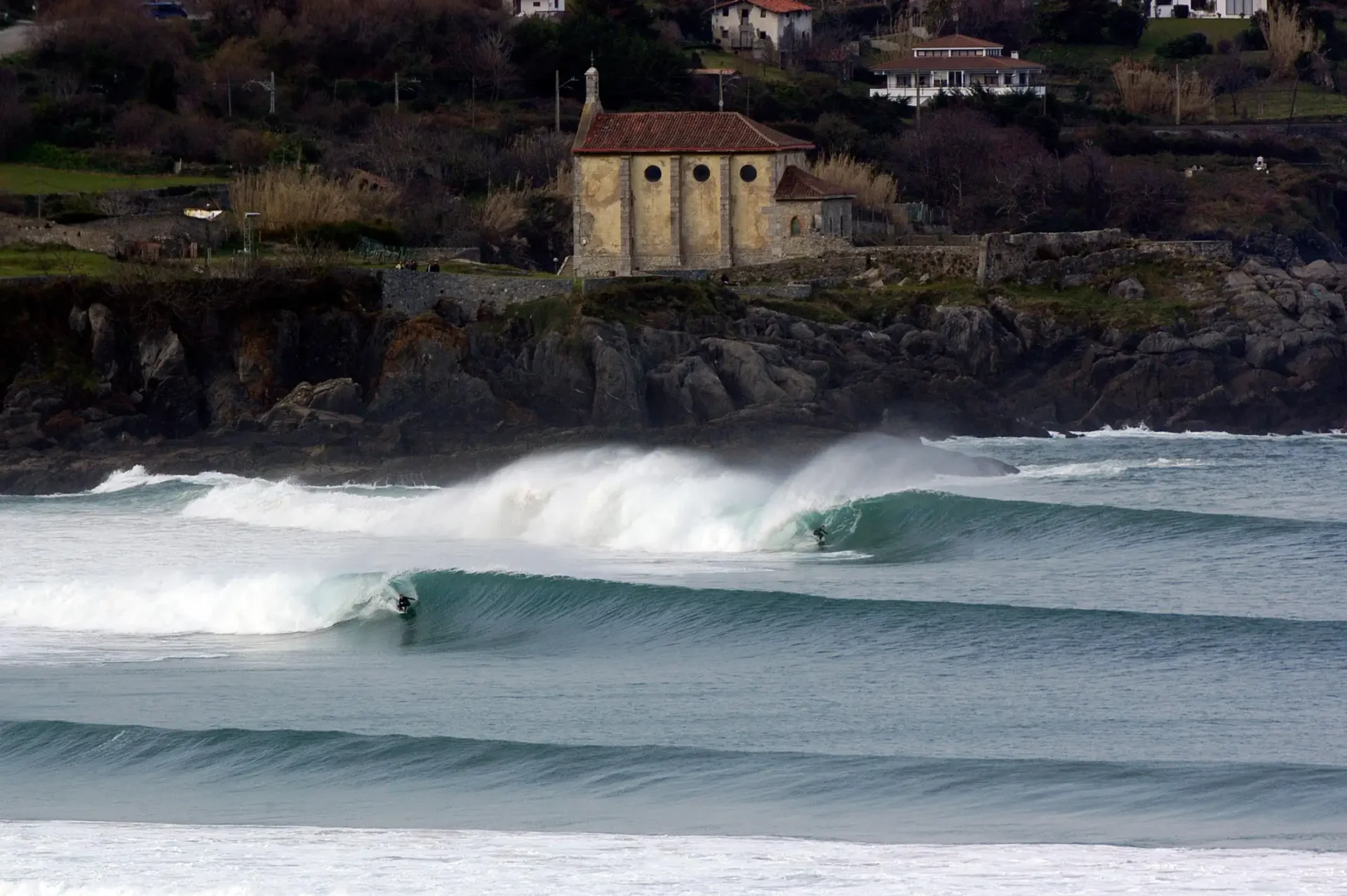
Mundaka is the most beautiful fishing town on the Basque coast of Bizkaia, famous in the whole world among surfers for having the best left wave in Europe. The Urdaibai Biosphere Reserve, at the mouth of which is Mundaka, is one of the most important marshes of the Cantabrian.
Gernika (Guernica) is the most powerful historical symbol of the Basque Country. The town was bombed on 26 April 1937 by German Nazi aviation at the request of Franco's army in the first bombing of massive air terrorism in modern history. Picasso painted the Guernica as an immediate response to the news. The Gernika tree, a secular symbol of Basque freedoms, and the people's peace museum are deeply moving visits.
From Bilbao: tour of Gaztelugatxe, Mundaka and Guernica - Top rated. 6 hours with transport from Bilbao, expert guide and visit to all three points. 4.8 with more than 1,681 opinions. It's constantly running out. From €55. The best-valued tour of the entire Bilbao catalogue.
Bilbao: Gaztelugatxe, Bermeo, Mundaka, Gernika and Wine Route - The most complete version: 10 hours of full day added by Bermeo (another historical fishing village) and a route through the local txakoli wineries. 4.6 with more than 2,231 opinions. From €49.
San Sebastián, Hondarribia and the gipuzcoana coast
San Sebastián (Donostia) It is 100 km from Bilbao and is systematically chosen as one of the most beautiful cities in Europe. La Concha Bay, with its perfect half-moon shape and the island of Santa Clara in the center, is one of the most photographed urban landscapes in Spain. The Old Part has the highest concentration of pintxos bars in the world per square meter. And the restaurants in San Sebastián have more Michelin stars per inhabitant than Tokyo.
Hondarribia is the best preserved medieval village in the Basque Country, with its 15th century intact wall and its historic centre of wooden houses painted in colors on the estuary of the Bidasoa, on the same border with France.
From Bilbao: Excursion to San Sebastián, Hondarribia, Hendaya and Getaria - 10 hours full day on the Gipuzcoan coast and the French border, with stops at the four most spectacular points. 4.7 with more than 437 opinions. From €45.
Biarritz, Saint-Jean-de-Luz and San Sebastián from Bilbao - For those who want to cross the border and discover the French Basque Country: Biarritz with its belle époque villas and Atlantic waves, and Saint-Jean- de-Luz with its typical industrial architecture. 10 hours, from €70.
Itinerario Bilbao 2-3 days: how to organize it
If you have 1 day in Bilbao
Tomorrow at the Guggenheim (booking online entry, minimum 2 hours). Half-day of painters in the Old Hat. Late walking through the river to the Old Town, with a visit to the Bank Market and the New Square. If you want to see the Guggenheim and the Old Helmets with guide, the 3-hour electric bike tour covers both points very efficiently.
If you have 2 days in Bilbao
Day 1: Guggenheim + pintxos gastronomic tour (reserve one of the catalogue's gastronomy tours, are the most valued experience in the city). Day 2: Tour to Gaztelugatxe, Mundaka and Gernika. The tour includes transportation and guide, and lasts 6 hours.
If you have 3 days in Bilbao
Day 1: Guggenheim, ría and Casco Viejo. Electric bike tour in the afternoon. Day 2: A gastronomic tour of Basque pintxos and wines. Free afternoon to explore Indautxu and residential neighborhoods. Day 3: Excursion to San Sebastián, Hondarribia and the gipuzcoana coast.
Basque gastronomy: beyond the pintxos
The Basque Country has the highest concentration of Michelin stars per inhabitant in the world, and Bilbao is part of that extraordinary gastronomic ecosystem. Beyond the bar painters, these are the dishes and products you can't stop trying:
Cod to pil pil
The most iconic dish in the Basque cuisine. Fallen cod cooked at low temperature in olive oil with garlic, until the gelatin of the cod itself emulsione with the oil forming a white and creamy sauce that is made by balancing the pot. Simple, technically complex to run well and absolutely delicious.
Cod to the vine
The bilbain version of the cod: cooked with a choricero pepper sauce, onion and tomato that gives an intense dark color and a deeply smoked taste. The vizcaine sauce is one of the most complex sauces in traditional Spanish cuisine.
Txangurro a la donostiarra
Txangurro is the sea ox in Basque. The donostiarra version (from San Sebastián) is prepared by filling the ox's own shell with the minced meat mixed with onion, tomato, cognac and herbs, grated in the oven. A celebration dish that embodies the wealth of the Cantabrian Sea.
Txakoli
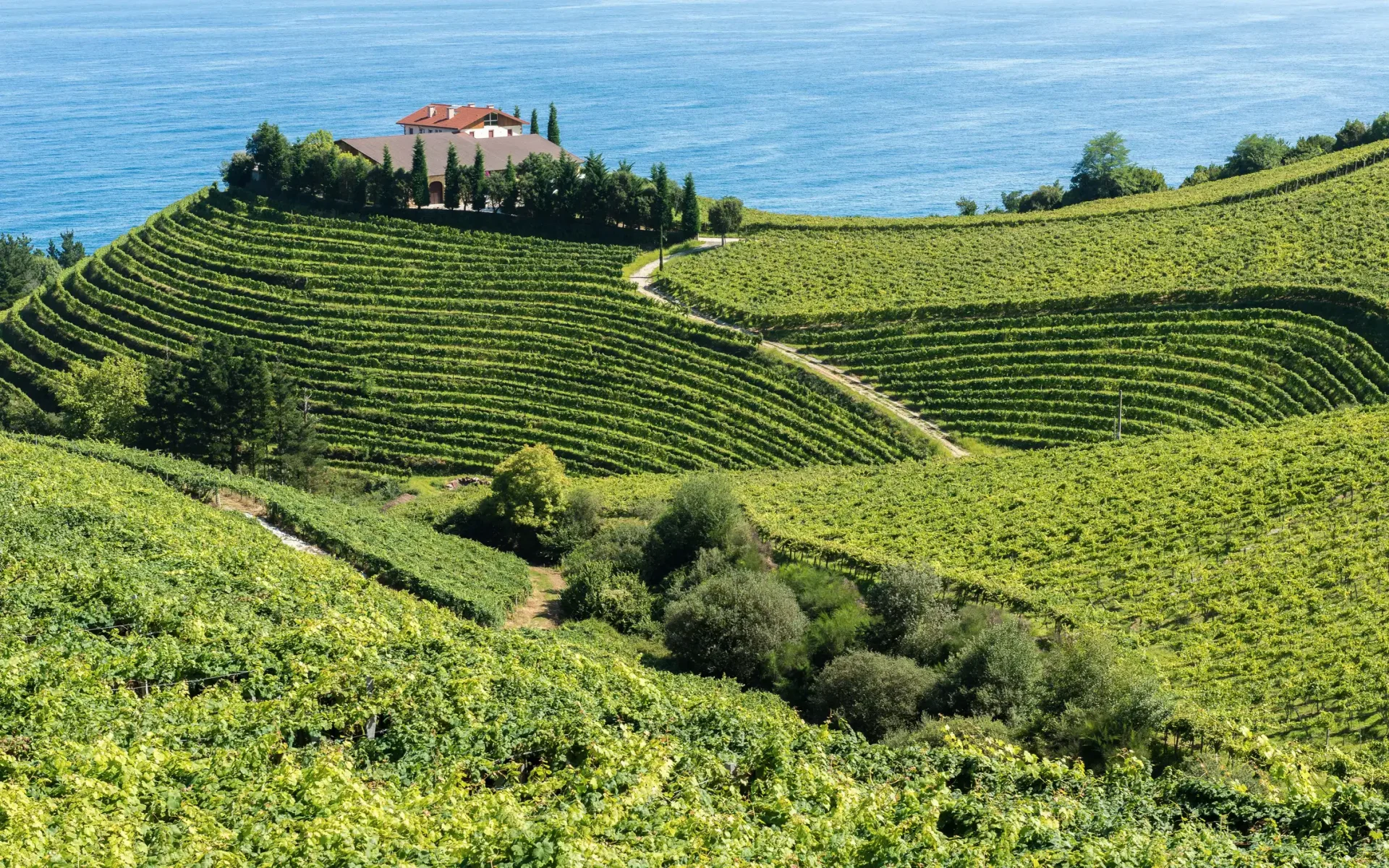
The slightly sparkling white wine and acid of the Basque Country, made mainly of Hondarribi Zuri grapes. It is served by skipping from a certain height to air the wine and enhance its acidity. It is the wine that accompanies the pintxos and the fish, and has designations of origin in Bizkaia, Gipuzkoa and Álava.
Idiazabal
The most famous smoked latxa cheese in the Basque Country. Cured and slightly smoked, it has a firm texture and an intense taste that go perfectly with membillo jam or honey. It is produced in both the Basque Country and Navarra and has a designation of its own origin.
What to see in Bilbao beyond the Guggenheim
Museum of Fine Arts of Bilbao
Unjustly eclipsed by the Guggenheim, the Bilbao Museum of Fine Arts has a permanent collection of Spanish painting of the Golden Century (Zurbarán, El Greco, Goya) and 20th-century Basque art (Regoyos, Zuloaga, Ituri) of the first level. The entrance is free on Wednesdays. It is a five-minute walk from Guggenheim, in the Park of Doña Casilda.
The Funicular of Artxanda
The funicular that rises to Mount Artxanda from the district of Castaños gives access to the lookout with the best panoramic views of Bilbao: the whole city, the ria, the Guggenheim and the green mountains surrounding the valley. The trip takes 3 minutes and the ticket costs less than €2. On the mountain there are parks, restaurants and the family atmosphere of the bilbaínos in their free time.
The Pendant Bridge of Bizkaia
12 km from the centre of Bilbao, in Getxo, the Pendant Bridge of Bizkaia is the oldest ferry bridge in the active world, built in 1893 to cross the river of Nervion. Declared a UNESCO World Heritage Site in 2006, it carries pedestrians and cars in a gondola that hangs from two 61-meter-high towers. The combination of industrial architecture of the 19th century, the river of Nervion and the villages of the Bilbain bourgeoisie on both sides is a completely different image from that of urban Bilbao.
Azkuna Zentroa (Alhóndiga Bilbao)
The old wine store in Bilbao, converted into a cultural center by designer Philippe Starck in 2010. The interior is one of the most bold architectural interventions in Spain: 43 unique columns, each designed by a different artist, support the structure of the building creating a completely unrepeatable space. It has a rooftop pool with a transparent background over the central atrium - another architectural rarity of this city that is not surprising.
Practical tips for visiting Bilbao
When to go
Bilbao has an Atlantic climate: green, wet and with frequent rain all year round. Spring (most - June) and autumn (September - October) are the most pleasant and preferred times of the travelers. Summer is the high season, with the Great Week of Bilbao (Atte Nagusia) in August as the peak of the festive year. Winter is cold and rainy but it has its charm, especially in the Old Town with Christmas markets.
How to move
The Bilbao Metro (designed by Norman Foster, with its famous glass entrances called "fostertites") connects the center with the neighborhoods and municipalities of Gran Bilbao efficiently. The tram He walks the banks of the river connecting the Old Town with the Guggenheim and the Abandoibarra district. For most visits within Bilbao, the feet are the best means of transport.
Where to stay
Old Hood: The most authentic. In the middle of the neighborhood life, close to the best pintxos bars and the ria.
Abandoibarra (Guggenheim area): the most modern neighborhood, next to the museum and the river. Design hotels and promenade.
Indautxu / Albia: elegant residential areas with good gastronomic offer and shops.
Budget
Bilbao is a city of medium-high price compared to the rest of Spain. The bar painters cost between 2 and 4 €the unit; the menus of the day in restaurants of the Old Town between 14 and 20 €; the gastronomic tours are between 95 and 105 €. A traveller with a medium budget can plan between €100 and €150 per person per day including medium-range accommodation, meals and an experience.
Related items that may interest you
Frequently asked questions about what to see in Bilbao
How many days do I need to visit Bilbao?
With 2 days you can see the essentials: the Guggenheim, the Old Town with pintxos and an excursion to Gaztelugatxe and the Basque coast. With 3 days you add more gastronomic depth, the Museum of Fine Arts and a second excursion. To see Bilbao well and calmly, the ideal is 3-4 days.
How much is the entrance to the Guggenheim Museum in Bilbao?
The general entrance is around €16-18. Children under 12 come in for free. On Wednesday the entrance is free for residents of the Basque Autonomous Community from 17h. For the rest, last-minute Wednesday may be the most economical option, although the tail can be long. Booking online guarantees free entry.
Is Bilbao's painters expensive?
Compared to the southern tapas, the Basque pintxos are more expensive (2-4 €the unit), but the quality and processing are much higher. A complete round of painters and wine in three or four bars of the Old Town costs between €15 and €25 per person, which is perfectly reasonable for the quality you get.
Is Gaztelugatxe worth it?
Absolutely. It is one of the most impressive landscapes in northern Spain and the excursion combined with Mundaka and Gernika is one of the best quality-price relationships of the entire FeelRoute catalogue for northern Spain. The 241 steps up to the hermitage require some effort, but the view from above justifies it more.
Is Bilbao or San Sebastián better to visit?
They are complementary, not exclusive cities. Bilbao has the best contemporary art museum in Spain, the most experimental gastronomy and a fascinating process of urban transformation. San Sebastián has the most beautiful bay in Spain, the largest concentration of Michelin stars in the world and perhaps the best quality of life in Europe. The combination of both on the same trip is the perfect option, and the excursion from Bilbao to San Sebastián covers that need perfectly.
How do I get to Bilbao?
The Bilbao Airport (BIO)designed by Santiago Calatrava, it has direct connections from all Spanish and many European cities. From Madrid flights last 1h; from Barcelona 1h 10min. There is also train connection: the AVE does not reach Bilbao but there are conventional high-speed trains from Madrid (4h 30min) and connection to Barcelona via San Sebastián.
Conclusion: Bilbao, the city that reinvented its future
Bilbao is proof that cities can be reinvented without losing their identity. The same city that lived in the 1980s in the deepest industrial crisis in its history is today a European reference point for culture, gastronomy and architecture. And what makes Bilbao special above all is that this transformation did not erase what there was: the Old Town remains equally authentic, the pintxos bars remain of the Bilbaínos, the Athletic of Bilbao remains the team of all and the Basque pride remains the backbone of the city.
It is a city that deserves much more than the day of passage that many travelers give it. Give it two or three days, eat well, go explore the coast with organized excursions and let yourself be surprised by a city that knows perfectly what it is and where it goes.
You ready to plan everything? Discover all available tours and experiences in Bilbao in FeelRoute with free cancellation and instant confirmation.


