

Mallorca is the Spanish island with the most layers. The one that everyone knows - the sun and beach tourism, the large hotels of the south, the animation of Magaluf - meets a completely different island that most visitors do not see: the Tramuntana with its stone villages and its mountain roads over the sea, the coves of the east with Caribbean waters, the historic Palma with its Gothic cathedral over the port and the village markets where the mallorquins always continue to buy as always. This guide is for those who want to see both Mallorcas in three days.

Mallorca receives more than 13 million visitors a year, making it one of the most visited tourist destinations in the Mediterranean. But it has 3,640 km ² of extension - larger than many Spanish provinces - and a variety of landscapes, villages and experiences that most of these visitors do not get to know because they do not leave their resort. With three well-planned days and the right experiences reserved in advance, you will take a complete and honest picture of the best island in the Western Mediterranean.
Why Mallorca deserves much more than the beach
Mallorca's tourist reputation has for decades been the destination of sun and economic beach for European mass tourism. That Majorca exists and remains a perfectly valid option. But in the last 15 years another Majorca has emerged that has conquered a completely different traveller profile:
The Sierra de Tramuntana, declared a World Heritage Site by UNESCO in 2011 for its cultural landscape, with cornfield roads on the Mediterranean that are among the most spectacular in Europe.
Palma de Mallorca, a Mediterranean capital with one of the best gastronomic scenes in Spain, an extraordinary Gothic historical centre and the Santa Catalina district became a culinary reference of the Mediterranean.
The southeastern coves - Cala des Moro, Cala Mondragó, Es Trenc - with intense turquoise waters and white sands that compete with any Caribbean destination.
The villages of the interior - Sóller, Deià, Valldemossa - with a century-old Mallorcan architecture and quality of life that has attracted artists and creators from all over the world since the 19th century.
With three days, you have time to play all these Mallorcas. We started.
What you need to know before you get there
How to get to Mallorca
The Palma de Mallorca Airport (PMI) is the third most transit airport in Spain, with direct connections from almost all European national and international airports. The flights from Madrid last about 1h 10min; from Barcelona about 50 minutes; from Seville or Malaga about 1h 30min.
There is also the option of ferry from Barcelona (8h at night ferry or 4h at fast ferry) or from Valencia (9h at night). The ferries arrive directly to the centre of Palma, which prevents the airport-city transfer.
How to move through Mallorca
The rental car is the most recommended option for exploring the island with freedom. The roads of Mallorca are of good quality and the distances are manageable: from Palma to Alcúdia (north) are 55 km; from Palma to Cala Mondragó (southeast) are 65 km. Without your own car, many of the most spectacular landscapes on the island - especially in the Tramuntana - are very difficult to reach.
For the most popular excursions, the options organized include transportation and allow you to forget about the logistics: ideal if you don't want to drive or if the itinerary of the day means you can drink something during the excursion.
When it's best to visit Mallorca
The spring (April-June) and autumn (September-October) are the ideal times: the sea is already or is still temperate (between 20 and 24 ° C), the beaches have a fraction of summer visitors, the prices are more reasonable and the island is at its best landscape.
The summer (July-August) is the absolute high season: full beaches, fired prices, saturated Tramuntana roads and accommodation to be reserved months in advance. Even so, if you have no choice, summer in Mallorca remains extraordinary if you know where to go.
The winter (November-March) It's the quieter season. Many hotels and restaurants in the tourist areas close, but Palma works all year round and the Tramuntana in winter has a very different and very personal beauty.
Itinerario Mallorca 3 days: day to day
Day 1 - Palma de Mallorca: Cathedral, markets and the best port in the Mediterranean
On the first day we dedicated it to Palma, the capital. Many travelers who go to Mallorca in search of the beach spend a couple of hours in Palma. Wrong. Palma is one of the best Mediterranean cities in Spain and deserves a full day.
Tomorrow (9: 00h - 13: 30h): The Cathedral and the historic centre
It starts at Cathedral of Mallorca (La Seu), one of the most impressive Gothic buildings in the Mediterranean. Built between the 13th and 16th centuries on the site of the old major mosque of the Arab city, it dominates the port of Palma from the top of a promontory with a monumental presence that is seen from miles away. The interior, with a 44-meter-high central ship and the colorful glass windows of the architect Antoni Gaudí (who intervened in the restoration at the beginning of the 20th century), is of extraordinary artistic quality.
Next to the Cathedral is the Palau de l'Almudainathe old Arab palace became the royal residence of the kings of Mallorca in the 13th century and today the official residence of the Kings of Spain when they visit the island. The state rooms and gardens are visitable and give a fascinating view of the history of the Aragon Crown.
From here, the walk through the historic town of Palma takes through medieval streets full of Renaissance palaces, baroque churches and hidden patios: the Calle de la Portella, the Plaza de Cort with its 17th century City Hall, the Basilica of Sant Francesc with the most beautiful Gothic cloister of the island and the Arab Baths of the 10th century (the only remains of civil Arab architecture that are preserved in Mallorca).
Mediodía: Mercado de l'Olivar y Santa Catalina
The Mercat de l'Olivar is the central market of Palma, with an impressive gastronomic offer: newly made, oversized Majorcan, cheeses, very fresh fish from the Mediterranean and vegetables from the local garden. It is the best introduction to Mallorcan cuisine.
To eat, the neighborhood of Santa Catalina, five minutes from the center, it has become in recent years the epicenter of the creative gastronomy of Palma and a culinary reference at Mediterranean level. Restaurants of all styles and prices, with a concentration of gastronomic talent that would be remarkable in any great European city.
Afternoon (16: 00h - 20: 00h): The port and the promenade
The Paseo Marítimo de Palma is one of the most spectacular of the Mediterranean: an avenue by the sea with the Cathedral and Palau de l'Almudaina as a permanent backdrop, bordered by the largest marina of the Balearic Islands, full of sailboats and yachts that give an unmistakable image of Mediterranean glamour.
To see Palma and its bay from the water, the catamaran cruise is the perfect option for the end of the first day:
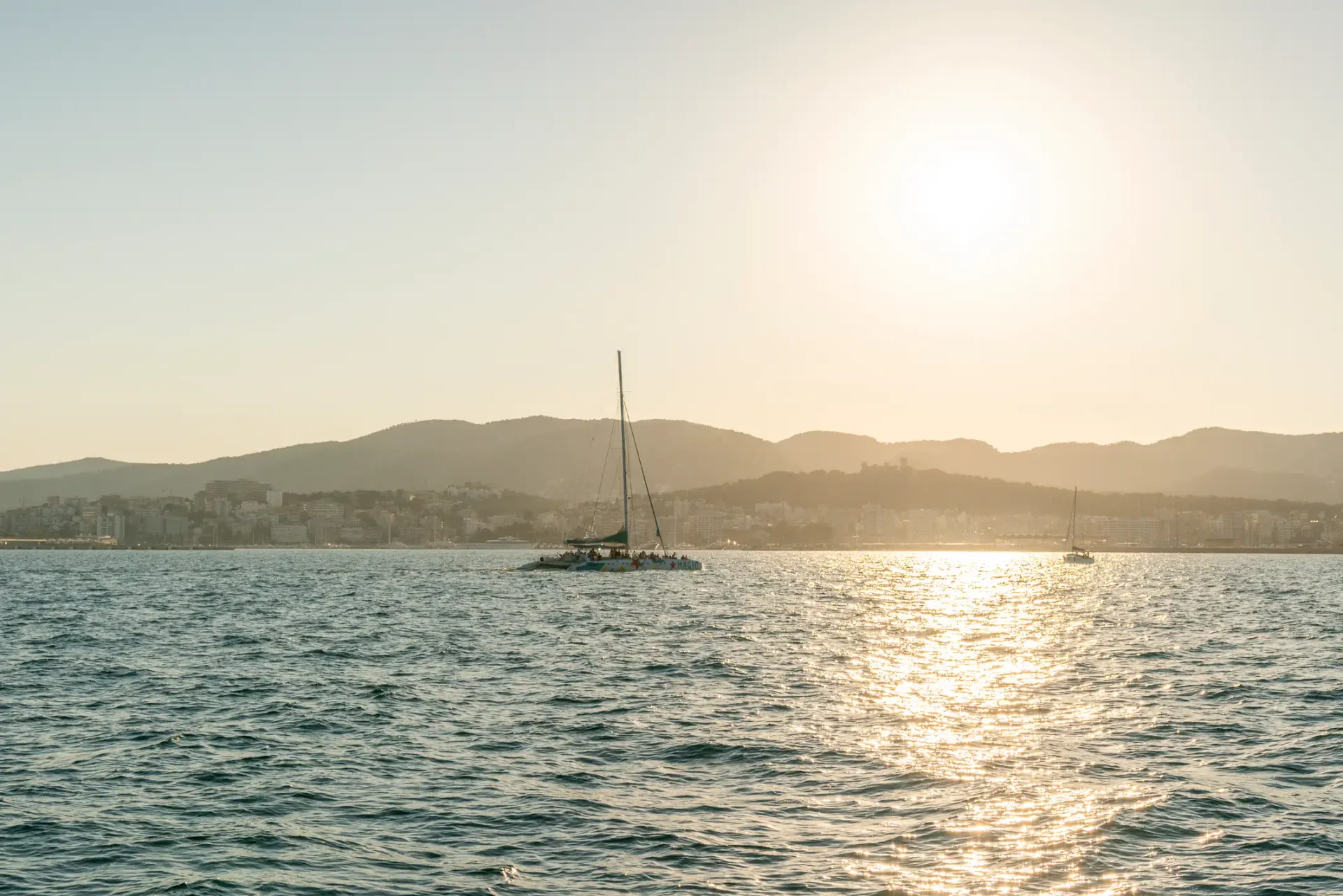
Palma de Mallorca: 5-hour catamaran cruise with lunch and bathroom - The most popular tour of Mallorca in FeelRoute. 5 hours sailing through the bay of Palma with lunch included and stop to swim in crystal clear waters. More than 9,950 reviews with 4.5 rating. From €59.
Luxury catamaran navigation with welcome drinks and tapas - Top rated. The premium version for groups up to 12 people: luxury catamaran with drinks and tapas included. 4.8 on average, from €99.
Day 2 - The Sierra de Tramuntana: Sóller, Deià and Valldemossa
The second day is the most impressive of the itinerary: the Sierra de Tramuntana, the mountainous backbone of northwest Mallorca, declared World Heritage by UNESCO.
Tomorrow (9: 00h - 13: 00h): The route of cornisa and Valldemossa
The road Ma-10 that runs the Tramuntana from Andratx to Pollença is one of the most spectacular roads in Europe: a succession of curves on vertical cliffs with the Mediterranean hundreds of meters below, with peaks that exceed 1,400 meters of altitude (the Puig Major, the highest of the Balearic Islands) and a vegetation of millennia olive, pine and oak that gives the landscape a unique character.
Valldemossa is the first of the great towns of the Tramuntana on the route from Palma. Famous all over the world because Frédéric Chopin and George Sand spent here the winter of 1838-1839 - Chopin here composed part of his Preludios while suffering the tuberculosis that would end his life - the people keep the Cartoixa de Valldemossa (the 14th century card where they lived) as a museum. The streets of Valldemossa, with its facades of Mallorcan stone and the geraniums pots, are among the most photographed in all of Spain.
Midday (13: 00h - 15: 30h): Deià and the sea
Deià is probably the most beautiful town in Mallorca and one of the most beautiful in Spain. Hanged on the side of the Tramuntana on the sea, with its ocre houses climbed to the sky and the Church of Sant Joan Baptista on the top, it has attracted artists, writers and musicians from all over the world since the 19th century. The poet Robert Graves lived here from 1929 until his death in 1985 and his home-museum is visitable.
Two kilometres from Deià, the Cala de Deià (known locally as Cala Deià) is one of the most wild and spectacular coves of the Tramuntana: stony, small, with waters of extraordinary clarity and surrounded by cliffs that protect it from the wind. Perfect for the noon bath.
Afternoon (15: 30h - 20: 00h): Soller and the historical tram
Soller is the largest and most living town in the Tramuntana. With an amazing modernist architecture to be a village of 14,000 inhabitants (the wealth of the orange trade in the late 19th century brought Catalan and French architects), Sóller has the most beautiful plaza in Mallorca, the Jardí Botànic de Sóller (specialized in Mallorcan and Macaronesian flora) and a historical connection with Palma which is in itself an experience:
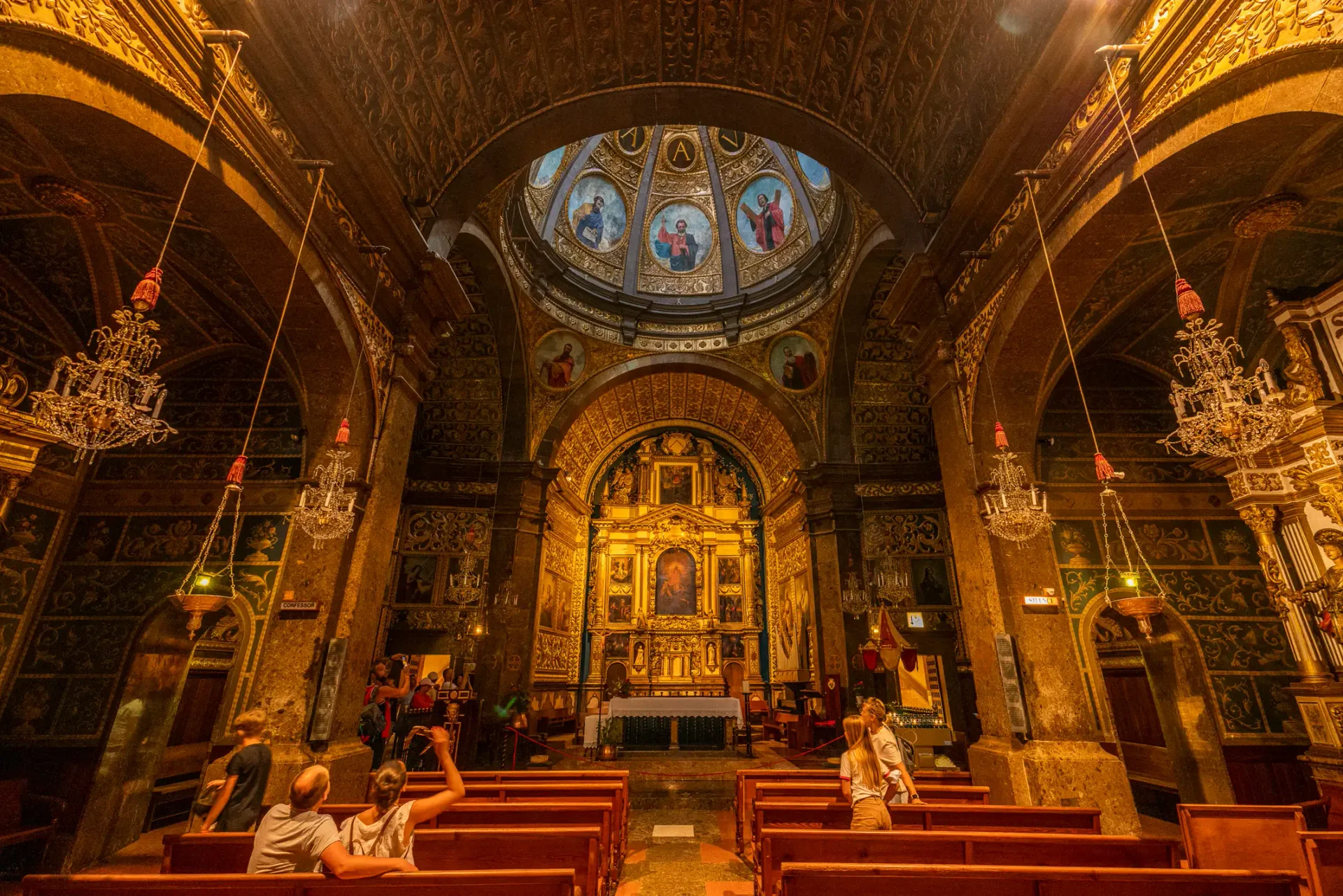
Majorca: Return to the island by boat, tram and train from the south - One of the most unique experiences of Mallorca: it combines the centenary wooden train (the "Ferrocarril de Sóller" opened in 1912), the historic tram that goes down to the Port of Sóller and the ship back to Palma by the sea. 8 hours of unique experience. 4.4 with more than 3,870 opinions. From €99.
The Port of Sóller, 5 km from the village, down the historic tram, has a perfect circular bay with fish restaurants and a view of the cliffs of the Tramuntana from the water that is difficult to forget.
Day 3 - The coves of the southeast and adventure in nature
On the third day we dedicated it to the other side of Mallorca: the southeast, with the most spectacular coves on the island and the most popular experiences of adventure and nature.
Tomorrow (9: 00h - 14: 00h): Cala des Moro and S'Almunia
Cala des Moro It is systematically classified as one of the most beautiful beaches in the Mediterranean. Its cobalt blue waters on white sand and limestone, surrounded by pines that go down to the edge of the water, are of a beauty that seems impossible without leaving Spain. The problem is that everyone knows: in July and August the cove is filled before 9 a.m. and the authorities have had to limit access by car.

Cala des Moro & S'Almunia: the smart way to visit them - Top rated. The perfect solution to visit these two coves without parking and access problems: 6-8 hours guided tour including transport, snorkel in coves and guide. 4.9 valuation with more than 370 opinions. From €119. It's constantly running out.
Afternoon (15: 00h - 19: 00h): Quad or balloon adventure at dawn
For the third day, Mallorca offers some of the best adventure experiences in the Mediterranean. Choose according to your preferences:
Option A: Quad excursion inside

Excursion in Mallorca in Quad - Top rated. 3 hours of quad route through the interior of Mallorca, visiting rural farms, land roads and viewpoints that cannot be reached by conventional car. 4.9 valuation with more than 447 opinions. From €92.
Quad / ATV tour - Top rated. 2 hours of quad / ATV adventure with guide. 4.9 on average with more than 323 opinions. From €95.
Option B: balloon flight at dawn (the most special experience)

Romantic tour in a balloon at dawn in Mallorca - Top rated. The most emotional experience of the entire island: 3-4 hours that include the balloon flight at dawn over the Tramuntana and the Mallorquins fields, with the Mediterranean shining in the distance. Perfect for couples. 4.9 valuation with more than 466 opinions. From €190. It runs out days in advance.
- Council: the balloon at dawn requires to leave very early (before 6: 00 in summer). If you have the flight back in the afternoon, it's perfectly compatible. If you have the flight early in the morning, this experience doesn't fit the itinerary.
The caves of the Drach and the Hams: the underground of Mallorca
The south-east of Mallorca hides under the ground one of Spain's most impressive natural wonders: a network of karmic caves with underground lakes of completely transparent saline waters. The most visited are the Drach caves (near Porto Cristo), with the Llac Martel, one of the largest underground lakes in the world, where classical music concerts are held on floating boats with an extraordinary acoustics.
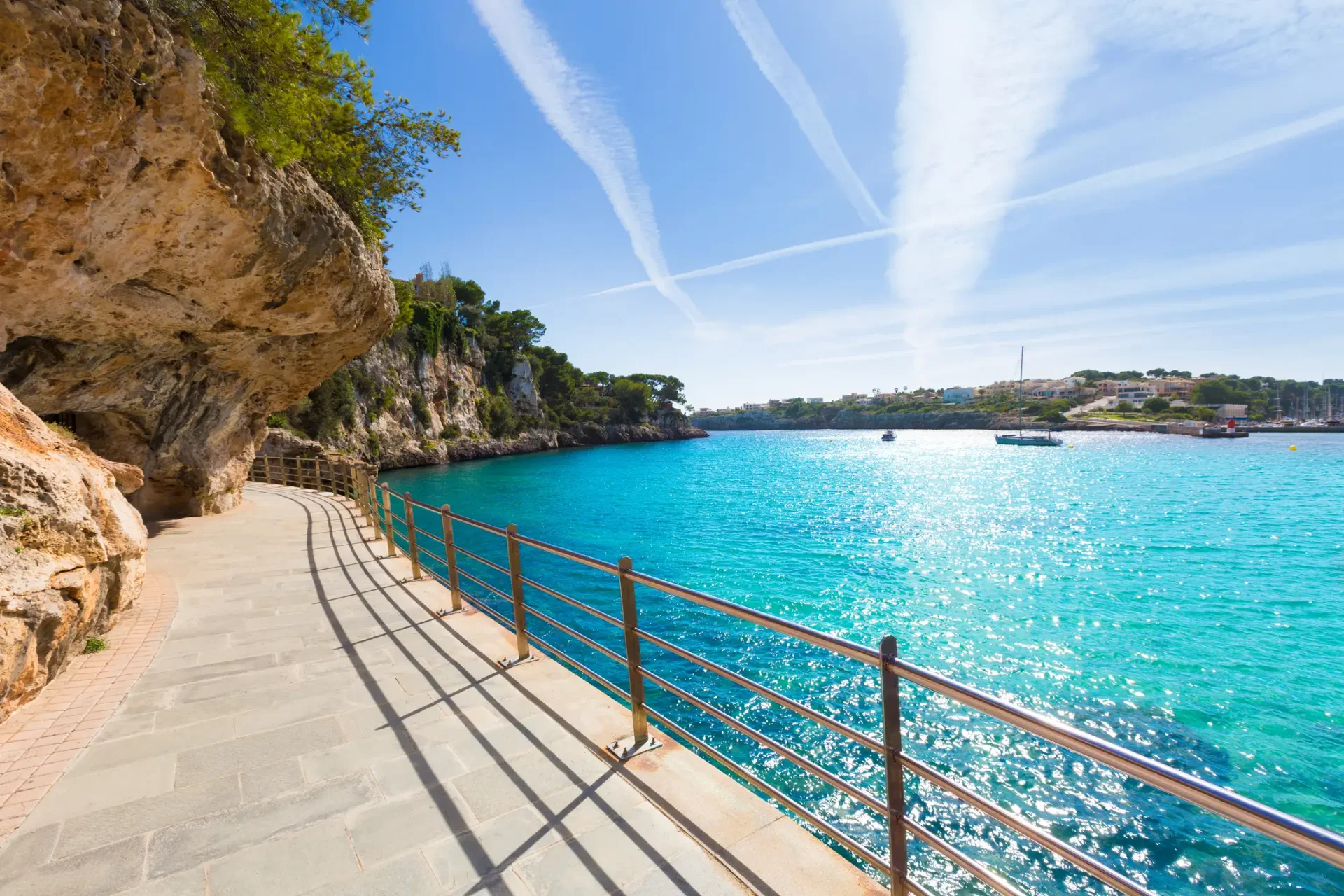
Porto Cristo: Caves of the Hams - Ticket of entry - The caves with the world's largest known underground salt water lake. 1 hour visit with classical music concert on the lake included. 4.2 with more than 6,524 opinions. From €18.
The caves are about 60 km from Palma (1 h by car) and can be perfectly combined on the same day as Cala des Moro.
The villages of Mallorca that you can't lose
Pollença and the Port of Pollença
Pollença is the town of the north of Mallorca with the most personality and best preserved: its historical Roman town, the rise of the 365 steps to the Calvari, the Sunday market in the plaza majeure and the Cala de Sant Vicenç a few kilometers away form a perfect combination for a morning or an afternoon.
Alcúdia: the Roman city
Alcúdia the most complete medieval wall of Mallorca and, under the city, the remains of Pollentia, the Roman city founded in the 1st century BC The archaeological site and the museum are very recommended visits for the lovers of history. The Badia de Pollença and Badia d'Alcúdiawith its shallow and quiet waters perfect for families, they are the most popular beaches in the north of the island.
Felanitx and the Sanctuary of Sant Salvador
The Sanctuary of Sant Salvador, on the top of a hill in the south-east of Mallorca, has the best views of the island: on a clear day the North Sea and the South Sea are seen simultaneously, with the Tramuntana at the bottom and the almond fields and vineyards in the center. Car access is possible but the road has one-way sections.
Mallorcan Gastronomy: What to eat on the island
The Majorcan cuisine is one of the most interesting and unknown in Spain. With Arab, Catalan and Mediterranean roots, it has unique products and preparations that you will not find anywhere else:
Ensaimada: the most famous sweet in Mallorca and one of the most recognizable in Spain. A spiral-rolled brioche, spongy and slightly sugary, which is eaten at breakfast. In Palma, the Forn des Teatre is the historical reference pastry.
Overtaken: the most emblematic funnel on the island. A kind of fresh chorizo with very soft texture, made of black Majorcan pig and sweet and spicy pepper. It is eaten in toast with honey above - a sweet-salted combination apparently strange and absolutely addictive.
Pa amb oli: breakfast or Majorcan snack par excellence. Mallorcan payee bread rubbed with mature tomato and irrigated with extra virgin olive oil. Simple and perfect. With excess, cheese or ham on it becomes a complete meal.
Tumbet: the most traditional vegetable dish of the Majorcan cuisine. Potato, eggplant and fried pepper with tomato sauce. It is accompanied by fish and roast meat and is essential in any menu of the Mallorcan day.
Lobster tablet: the caldoso (caldoso stew) of menorcan and ibicenca lobster is the luxury dish of the Mediterranean balear. In Mallorca you find it in the restaurants of the coves of the north, especially in the Port of Pollença and in the Port of Alcúdia.
Wines of Binissalem and Pla i Llevit: the two designations of origin of Mallorca produce wines with native grapes (Manto Negro, Callet, Premsal Blanc) of high quality and Mediterranean personality.
Practical tips to visit Mallorca in 3 days
Car rental
For this itinerary, your own car is practically essential for Day 2 (the Tramuntana) and Day 3 (the southeast). Palma airport has all the large rental companies; prices in the medium season (May, June, September, October) are reasonable. Book in advance for the high season.
Where to stay
Palma: the best base for the three days of the itinerary, with good communications to the Tramuntana and the southeast. The historic centre has high quality boutique hotels; the Santa Catalina district is the most vibrant area.
Sóller or Port of Sóller: for those who want to stay in the Tramuntana, with an atmosphere completely different from the south coast.
Cala d'Or or Porto Petro: for who puts the southeast and coves as an absolute priority.
Estimated budget
Mallorca has a very wide price forklift depending on the season and type of accommodation. In the middle season (May, June, September), a traveller with an average budget can plan between €120 and €180 per person per day including medium-range accommodation, meals and a daily experience. In August, all prices rise by 30 to 50%.
Related items that may interest you
Barcelona in 3 days: full itinerary and best tours - the city from which many flights and ferries leave to Mallorca.
What to do in Tenerife: 10 essential experiences - the other great Spanish island with all year of good weather.
Valencia in 3 days: what to see, itinerary and best tours - another Mediterranean city with ferry directly to Mallorca.
Frequently asked questions about Majorca in 3 days
Is it enough with three days to see Mallorca?
With 3 days well organized you can see the essential: Palma, the Sierra de Tramuntana (Valldemossa, Deià, Sóller) and the coves of the southeast. To see the island in depth - including Pollença, Alcúdia, Formentor, the interior and all coves - you would need at least a week. But for a first visit to give you a full picture of the island, 3 days is enough.
What's the best cove in Mallorca?
It depends on what you're looking for. Cala des Moro (southeast) for the most crystalline water and the most spectacular landscape. Cala Deià (Tramuntana) for the wildest and least massified environment. Cala de Sant Vicenç (north) for the best quiet-beauty relationship. Cala Mondragó (Parc Natural de Mondragó) for families with children through the shallow waters and the protection of the sand.
What is better: Mallorca or Ibiza?
They're completely different experiences. Mallorca has more variety, more culture, more nature and more gastronomy. Ibiza has a more intense energy, the best sunsets in the Mediterranean and a scene of electronic music without rival in the world. For nature, culture and gastronomy: Mallorca. For party, sunsets and cosmopolitan atmosphere: Ibiza.
When does the Cala des Moro run out?
In July and August, the Cala des Moro is full of people before 9am. Local authorities have implemented car access restrictions in high season. The organized tour is the smartest way to visit the cove without parking stress and with access guarantee.
Is it worth the balloon flight in Mallorca?
Yes, especially for couples and for those who visit Mallorca in their best season (spring and autumn). The combination of dawn over the Tramuntana and the Mediterranean from an aerostatic balloon is one of those experiences that are remembered decades later. The price (from €190) is high but justified for a special occasion.
Is the Sóller train worth it?
Absolutely. The Sóller Railway is one of the most beautiful historical railways in Spain: wooden wagons from the 20th century that cross tunnels and viaducts inside the Tramuntana. The experience combined with the historical tram that goes down to the Port and the ship back to Palma is one of the most complete and unique that you can do in Mallorca.
Conclusion: Majorca, much more than a beach
Mallorca is the island that most surprises the one who visits for the first time without previous expectations. They wait for sun, beach and night animation, and also find a first-level Mediterranean capital, a mountain saw declared a World Heritage, turquoise coves that compete with the Caribbean and a local product cuisine that deserves a trip on its own.
With this three-day itinerary and the correct experiences reserved in advance, you will take a complete and honest picture of the island. And when you come back - almost everyone comes back - you'll know exactly what corner of the island you want to go into.
You ready to plan everything? Discover all available tours and experiences in Mallorca in FeelRoute with free cancellation and instant confirmation.


